Rusty Grunge Backgrounds: 12 High-Resolution Textures for Authentic Design
When you are building a brand or crafting a marketing campaign, the texture you choose is just as critical as the typography. A pristine, sterile white background works for some corporate environments, but if your goal is to evoke history, durability, or a raw, organic edge, you need something with more character. This is exactly where the Rusty Grunge Backgrounds collection shines. It provides an immediate solution for designers and entrepreneurs who want to inject a sense of rugged realism into their work without spending hours searching for the perfect texture.
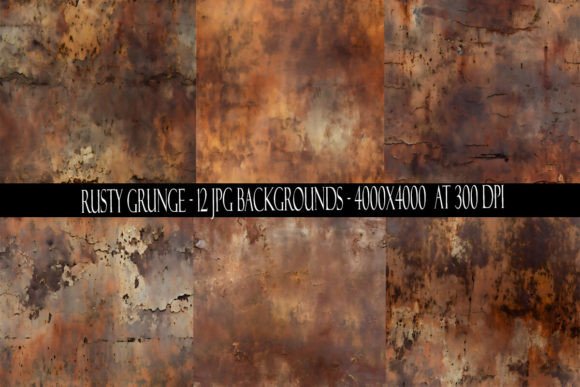
This digital pack is not just a random assortment of images; it is a curated set of 12 distinct JPG backgrounds. Each design captures the complex visual language of oxidation and decay, offering a rich palette of browns, oranges, and deep metallic shadows. The appeal lies in the imperfections—the pitting, the flaking paint, and the uneven weathering that tells a story of time passing. For a creative professional, these backgrounds serve as a versatile foundation for projects ranging from vintage logo design to gritty social media graphics.
Visual Characteristics and The Power of Texture
Understanding the aesthetic of Rusty Grunge Backgrounds is key to using them effectively. These are not just flat colors; they are high-fidelity captures of physical surfaces. The "grunge" element implies a departure from the clean lines of modern minimalism. Instead, you are dealing with a visual weight that grounds your content. The rust patterns offer a natural form of visual hierarchy—areas of lighter oxidation can draw the eye, while darker, corroded sections provide a strong backdrop for text or focal points.
The "personality" of these backgrounds is unapologetically industrial, vintage, and tactile. They speak of factories, old machinery, abandoned infrastructure, and the resilience of metal against the elements. This makes them an exceptional choice for projects that need to feel established or "lived-in." If you are working on a typeface or logo design that needs to look printed on metal or aged wood, these textures provide the necessary context. They bridge the gap between digital flatness and physical reality, making your designs feel tangible and immediate.
Practical Applications Across Industries
The versatility of the Rusty Grunge Backgrounds collection extends across a wide range of commercial and creative sectors. Because the files are provided at 4000 x 4000 pixels and 300 dpi, they are technically robust enough for both digital and print applications. You do not have to worry about pixelation when scaling up for large format printing.
Here is how different professionals can leverage this collection:
- For Branding and Logo Design: If you are developing a brand identity for a craft brewery, a mechanic shop, a rock band, or a men’s grooming line, these backgrounds set the mood instantly. They act as a canvas that communicates strength and authenticity before the viewer even reads the text.
- For Packaging Design: In the competitive world of shelf presence, texture stands out. Using a rusty grunge background on a coffee bag label or a hot sauce bottle can suggest a rich, deep flavor profile. It adds a layer of premium, tactile quality to the packaging design.
- For Web and Digital Design: While modern web design often favors flat colors, specific niches thrive on texture. These backgrounds work beautifully for website hero images, podcast covers, or YouTube thumbnails where you need to grab attention with high contrast and visual grit.
- For Print on Demand (POD): This is a significant advantage of the collection. With the included commercial and POD licensing, you can legally apply these backgrounds to merchandise like t-shirts, mugs, and posters. A vintage rusty texture often sells well in the POD market because it appeals to a wide demographic that appreciates retro and industrial aesthetics.
- For Editorial and Publishing: Magazines, book covers, and zines often require atmospheric backgrounds. Whether you are designing a cover for a thriller novel or a layout for a history magazine, these textures provide depth without overpowering the typography.
Technical Specifications and Workflow Integration
One of the biggest pain points for designers is receiving assets that are too small or poorly formatted. The Rusty Grunge Backgrounds collection solves this by offering high-resolution files in a non-seamless format. This means each image is a complete composition, ready to be used as a standalone background rather than a repeating tile. This is particularly useful for editorial design and large prints where repeating patterns can look artificial.
The files are delivered in JPG format within a zip file. JPG is the industry standard for photographic textures because it balances quality with file size, ensuring your computer doesn't lag while you are working in Photoshop, Illustrator, or Canva. The 300 dpi resolution is the gold standard for print, ensuring that if you decide to use these backgrounds for a brochure or a poster, the ink will sit on the paper with crisp detail.
Another practical benefit is the removal of the watermark upon download. This allows you to see exactly how the texture interacts with your design elements—be it a sans serif font for contrast or a script font for a vintage feel—without visual obstructions. You can test your font pairing strategies immediately, checking how legibility holds up against the complex noise of the rust patterns.
Design Strategy: Balancing Grit and Clarity
Using grunge textures requires a strategic approach to visual hierarchy. Because Rusty Grunge Backgrounds are visually "busy," you must ensure your foreground content remains the hero of the layout. This is where your choice of typeface becomes critical.
A common mistake is using a detailed handwritten font or a thin serif font directly over a rusted texture. The intricate details of the font can get lost in the noise of the rust. Instead, consider using bold, heavy typefaces. A thick display font or a geometric sans serif font creates a clear separation between the text and the background. You can also use techniques like adding a slight drop shadow, a subtle overlay, or placing the text inside a solid shape (like a badge or a banner) to ensure readability.
Furthermore, consider the color theory at play. Rust naturally contains warm tones—burnt sienna, ochre, and deep browns. Pairing these backgrounds with cool-toned text (like slate grey or crisp white) can create a pleasing visual contrast. Conversely, using a monochromatic warm palette can create a cohesive, earthy feel suitable for organic or artisanal brands.
Commercial Licensing and Value
For entrepreneurs and small business owners, the licensing of design assets is often a source of anxiety. The Rusty Grunge Backgrounds collection comes with Commercial and Print On Demand licensing. This is a significant value add. It means you are not just buying a texture for a one-off personal project; you are investing in an asset that can generate revenue.
Whether you are selling digital downloads on Etsy, creating merchandise for your brand, or designing client work, the legal framework is covered. This allows you to focus on the creative process—mixing these textures with your favorite premium font styles or incorporating them into complex social media graphics—without worrying about copyright infringement.
In summary, the Rusty Grunge Backgrounds collection is more than just a set of pictures. It is a toolkit for adding texture, history, and emotional weight to your designs. By combining these high-resolution assets with thoughtful typography and strategic layout, you can elevate your projects from flat digital screens to immersive, tactile experiences.