Steampunk Rabbit Backgrounds 1: Design Assets for Digital Projects
Visual Characteristics and Style
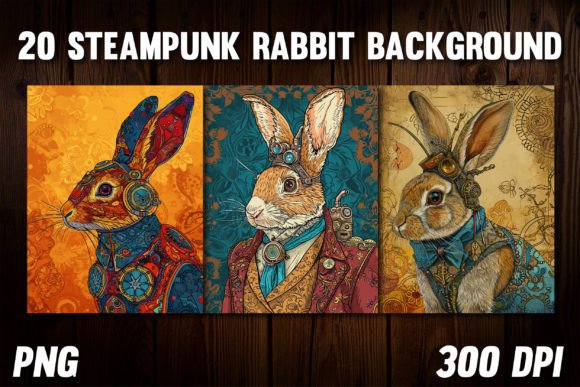
Steampunk Rabbit Backgrounds 1 is a collection of digital design assets, not a typeface. Its visual personality is a specific blend of whimsy and industrial aesthetics. The core appeal lies in the juxtaposition of natural, charming rabbit figures with the intricate, mechanical elements of steampunk design. You'll find rabbits adorned with goggles, top hats, and gear-driven accessories, set against backgrounds that evoke Victorian machinery and clockwork. The overall style is detailed, textured, and narrative, suggesting a story within each composition. This isn't clean, minimalist modern typography; it's a rich, layered visual language that adds immediate character and depth to a project.
The assets function as a premium font does in a design system—as a foundational element that sets a distinct tone. While a serif font might convey tradition and a sans serif font suggests cleanliness, these backgrounds communicate a specific brand of fantasy: one that is both retro-futuristic and playful. The color palettes often lean towards warm sepia tones, brass, copper, and deep browns, reinforcing the vintage, mechanical feel. The level of detail in the gears, pipes, and botanical elements is high, making them suitable for projects where visual richness is a priority.
Strategic Applications in Creative Work
Understanding where these backgrounds work best is key to leveraging their full potential. Their inherent complexity makes them ideal for projects where the background is meant to be a feature, not a neutral space. For brand identity, they can be perfect for a niche business—a specialty tea shop, a vintage-inspired craft brewery, or a boutique children's book publisher—where the logo design and packaging design need to instantly communicate a unique, story-driven personality. They are excellent creative fonts for a brand that wants to be seen as imaginative and detailed.
In publishing and editorial design, these assets shine. As backgrounds for book covers, especially in genres like fantasy, steampunk fiction, or whimsical children's literature, they create an instant mood. For interior pages, they can be used as chapter dividers, decorative borders, or full-page illustrations in coloring books or activity pads. The digital download format makes them practical for self-publishers and small business owners using platforms like Amazon KDP, where high-resolution, printable files are essential for quality output.
For digital and social media graphics, they offer a way to cut through generic content. A blog header, a podcast cover art, or a series of Instagram posts for a creative entrepreneur can use these backgrounds to establish a strong, recognizable visual theme. They are particularly effective for content creators in the maker, DIY, and historical fantasy spaces. When used in web design, they require careful implementation. A full-bleed background might overwhelm, but a strategically placed section, a textured sidebar, or a hero image with these elements can add powerful visual interest without sacrificing readability for body text, which would still require a clean sans serif or serif font pairing.
Practical Guidance for Implementation
Choosing to use a design asset as distinctive as Steampunk Rabbit Backgrounds 1 requires thoughtful evaluation. First, consider your project's core message and audience. Does the whimsical, mechanical aesthetic align with your brand's values and resonate with your target market? For a financial consulting firm, likely not. For a maker of handmade leather journals, it could be a perfect fit. Always test the asset in context. Place your primary typography—a headline in a strong display font and body copy in a readable serif or sans serif font—over a sample background to assess contrast and legibility. The intricate details can compete with text, so you may need to use a semi-transparent overlay, a solid color panel, or choose simpler backgrounds from the collection for text-heavy applications.
Evaluate the included styles within the collection. A good set will offer variations in density, color saturation, and composition—some busier, some more minimal. This allows for flexibility across different project types, from a dense scrapbooking layout to a cleaner digital art piece. For commercial use, always verify the licensing. Ensure the license covers your intended use, whether it for a small business's product packaging, a client's branding project, or items for sale on print-on-demand platforms. Using properly licensed design assets is a cornerstone of professional practice and protects your work and your client's brand.
Design Observations and Recommendations
From a design perspective, these backgrounds work best when they are treated as a key component of the overall brand identity, not just a decorative afterthought. Pair them with typography that complements their era-inspired feel. A vintage-inspired serif font for headlines and a clean, humanist sans serif for body text often creates a balanced hierarchy. Avoid pairing them with ultra-modern, geometric fonts, which can create a visual disconnect.
For practical use, consider these steps: 1. Define the Role. Is the background a hero element or a subtle texture? This will dictate which file you choose and how you modify it. 2. Manage Complexity. Use tools like opacity adjustments, color overlays, or cropping to focus the viewer's eye and ensure your main content remains the priority. 3. Test Print vs. Digital. A background that looks stunning on screen may lose detail in print. Always do a test print, especially for projects like packaging design or physical marketing materials, to ensure the resolution and detail reproduce well. 4. Integrate with Other Assets. These backgrounds can be part of a larger system. Combine them with matching textures, borders, or icon sets to create a cohesive suite of materials for a brand or publication.
Ultimately, Steampunk Rabbit Backgrounds 1 is a specialized tool in a designer's arsenal. It doesn't replace the need for fundamental design assets like versatile typefaces, but when used in the right context, it provides an unparalleled way to inject personality, narrative, and a memorable visual signature into a wide array of creative projects, from personal crafts to professional commercial ventures.