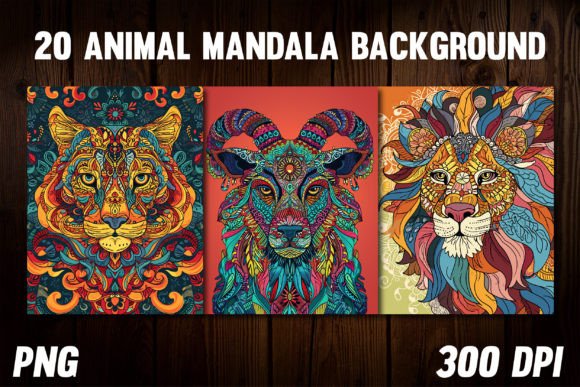
Animal Mandala Backgrounds for Covers 5: A Visual Deep Dive
The Anatomy of Symmetrical Artistry
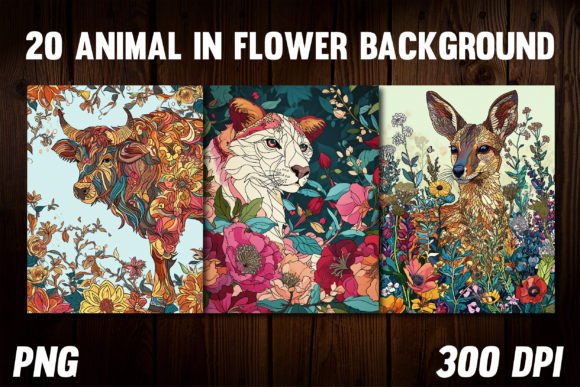
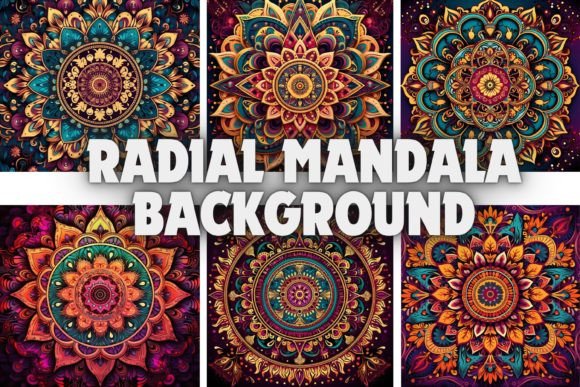
When you first open the Animal Mandala Backgrounds for Covers 5 collection, the immediate impression is one of controlled complexity. Unlike generic patterns, these assets are built on a foundation of sacred geometry, but they distinguish themselves through the integration of organic wildlife motifs. You won’t just find abstract shapes; you will find the regal curve of a lion’s mane, the delicate vein structure of a leaf, or the intricate eye of an owl, all woven into a seamless radial symmetry. This creates a specific visual personality: it is simultaneously soothing and stimulating. The style leans heavily into high-contrast line art, though the collection also explores rich, saturated fills for a more modern aesthetic. For a designer, this means you are working with assets that have a built-in focal point. The mandala structure naturally draws the viewer’s eye to the center, making it an incredibly powerful tool for cover design where you need to grab attention instantly.
The versatility of these backgrounds lies in their ability to act as both a subtle texture and a bold statement piece. If you are working on a brand identity for a wellness coach or a yoga studio, the symmetry communicates balance and mindfulness. However, if you are designing a cover for a fantasy novel or a children’s education book, the animal elements introduce a narrative quality that pure geometric patterns lack. It is this duality—mathematical precision meeting the chaos of nature—that gives the Animal Mandala Backgrounds for Covers 5 its unique edge in a crowded market of design assets.
Strategic Applications: From KDP to Brand Identity
Understanding where to deploy these backgrounds is key to maximizing their value. For the self-publishing community, particularly those utilizing Amazon KDP, these assets solve a persistent problem: creating professional-looking interiors and covers without breaking the bank on custom illustration.
- Coloring Books and Journals: The primary use case is often adult coloring books. The line art versions provide clean, distinct sections that are satisfying to color, while the complexity keeps the user engaged. For journals, using a desaturated version of a mandala as a background texture adds depth without interfering with legibility.
- Digital Marketing and Social Media: In the realm of social media graphics, attention is currency. A mandala background creates a visually rich "stage" for text overlays. Because the patterns are symmetrical, they don’t compete with central text as much as chaotic textures might. They work exceptionally well for Instagram quotes, podcast cover art, or Facebook banners.
- Packaging and Editorial Design: For small business owners in the beauty or herbal tea industry, these backgrounds offer a premium feel for packaging design. The intricate details suggest craftsmanship and care. Similarly, in editorial design, such as magazine covers or chapter dividers, a mandala can serve as a sophisticated visual break.
The key is to view these not just as "backgrounds," but as design assets that contribute to the hierarchy of your layout. They provide the mood, allowing your typography and primary content to deliver the message.
Integrating Mandalas with Typography
A common pitfall with intricate backgrounds is poor pairing with typefaces. If your background is busy, your text needs to breathe. When using the Animal Mandala Backgrounds for Covers 5, I recommend pairing them with clean, legible fonts. A geometric sans serif font often works best for body copy, as the clean lines contrast nicely with the organic curves of the mandala.
However, for headers, you can play with contrast. A bold display font or a serif font with high thick-thin contrast can stand up to the visual weight of the mandala. Avoid script fonts or overly ornate handwritten fonts for main titles unless the mandala is significantly faded or simplified in the background, as the visual noise will make the text unreadable. Here are a few practical tips for execution:
- Opacity and Blending: Don’t be afraid to lower the opacity of the mandala to 20-30% if you are placing text over it. This creates a sophisticated watermark effect that adds texture without visual clutter.
- Vignetting: Darkening the edges of the background helps push the viewer's eye toward the center where your title likely sits.
- Color Overlay: While the collection offers specific colorways, using a duotone effect or a single color overlay can help tie the background into your specific brand identity palette.
Evaluating Quality and Commercial Use
When investing in premium font packs or graphic bundles, quality control is essential. The Animal Mandala Backgrounds for Covers 5 collection is delivered as high-resolution files, which is critical for print. If you plan to use these for large-format printing, such as posters or canvas art, ensure you check the DPI (dots per inch). A resolution of 300 DPI is the industry standard for crisp print, whereas 72 DPI is sufficient for web design.
From a commercial licensing perspective, always verify the terms. Most collections of this nature allow for "Print on Demand" usage, which covers your KDP books or merchandise sold through platforms like Redbubble. However, there are often restrictions on reselling the digital files themselves. You are licensing the asset to create a new, derivative work, not to resell the asset as a raw file.
Finally, consider the "Serenity in Symmetry" aspect of the design. In a world of aggressive marketing and loud visuals, there is a growing trend toward calming, mindful aesthetics. Using these animal mandalas signals to your audience that your brand values balance, detail, and beauty. Whether you are a seasoned graphic designer or a small business owner managing your own DIY marketing, this collection offers a bridge between professional artistry and accessible design tools.