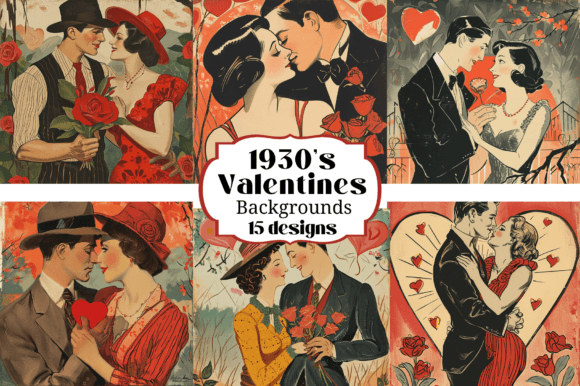
Rediscovering Romance: 15 1930's Valentines Cards Backgrounds
There is a specific kind of warmth in the design work of the early 20th century that modern digital tools often struggle to replicate. It is a tactile feeling—the slight imperfection of a lithograph, the soft fade of aged paper, and the earnest, unironic sweetness of the imagery. For designers and crafters looking to inject that specific nostalgic soul into their projects, finding high-quality source material is half the battle. This is where a curated collection of 15 1930's Valentines Cards Backgrounds becomes an invaluable asset. These aren't just flat images; they are portals to a distinct aesthetic era defined by pastel palettes, cherubic figures, and whimsical typography.
The Visual Character of 1930s Design
When we look at the 1930s, we see a departure from the sharp geometry of the Art Deco movement, moving toward something softer and more illustrative. The 15 1930's Valentines Cards Backgrounds collection captures this transition perfectly. You will notice the prevalence of "cute" as a design language—think chubby cupids, playful animals dressed in human clothing, and floral motifs that feel hand-drawn rather than mechanically produced. The color theory of the era relied heavily on soft reds, muted pinks, creams, and robin's egg blues. These backgrounds offer that premium font of visual texture. Because they are provided as high-resolution PNG files at 300 DPI, the intricate details of the original paper grain and printing techniques are preserved. This allows you to use them as a display font for your visual hierarchy, meaning the background itself tells a story before the viewer even reads the text.
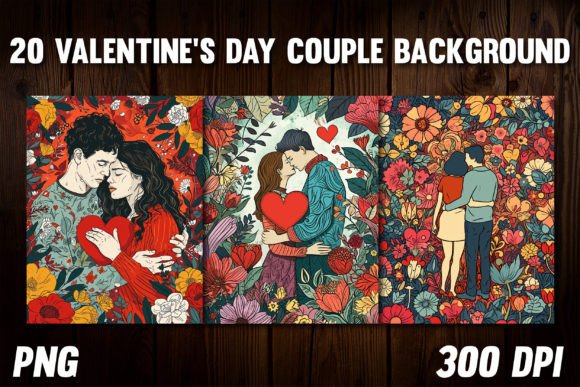
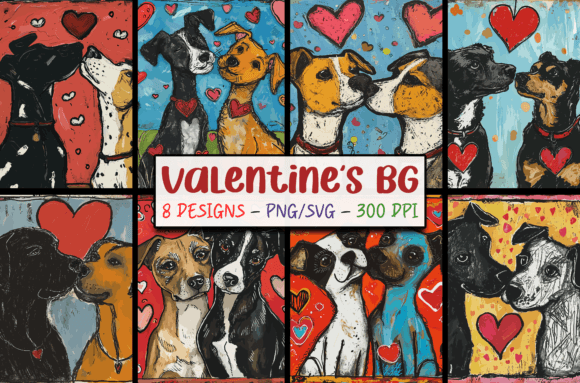
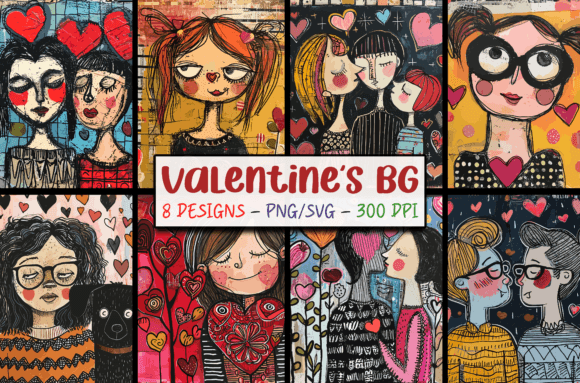
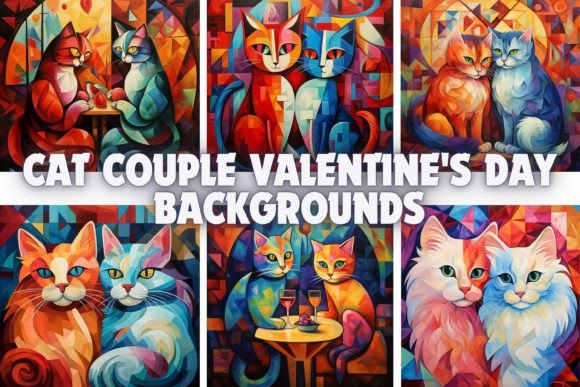
For the modern creative, these assets solve a common problem: the lack of authenticity. A filter can try to age an image, but it rarely gets the patina right. These 15 Beautiful square 1930's Valentines digital paper backgrounds illustrations provide genuine texture. They serve as excellent layers for collage and junk journaling, allowing you to blend modern photography with vintage ephemera seamlessly. If you are working on a brand identity for a boutique bakery, a vintage clothing line, or a stationery shop, these backgrounds provide the exact visual language needed to communicate heritage and care.
Practical Applications for Modern Creators
The versatility of this collection extends far beyond scrapbooking. In the realm of web design, texture is often the missing ingredient that makes a site feel "flat." Using one of these square backgrounds as a hero image or a repeating pattern can instantly soften a layout and create a focal point. For social media graphics, where attention spans are short, the intricate details of a 1930s illustration stop the scroll. It offers a visual break from the hyper-saturated, high-contrast imagery that dominates most feeds.
Consider packaging design. If you are launching a product line—perhaps artisanal chocolates, handmade soaps, or greeting cards—wrapping the product in a digital paper that mimics 1930s wrapping paper adds perceived value. It suggests that what is inside is crafted with tradition and quality. Similarly, in editorial design, these backgrounds work beautifully behind pull quotes or chapter headers, providing a creative font of visual interest that complements serif fonts and script fonts perfectly. The aesthetic pairs exceptionally well with handwritten fonts, creating a cohesive look that feels personal and intimate.
Integrating Vintage Assets with Modern Typography
One of the challenges of using vintage backgrounds is ensuring your text remains legible. This is where understanding font pairing is crucial. Because the 1930s style is often busy and illustrative, your foreground typography needs to stand out. A bold, clean sans serif font creates a striking contrast against the ornate, hand-drawn feel of the backgrounds. This juxtaposition of old and new is a hallmark of contemporary graphic design. It signals to the audience that the brand respects history but operates in the modern world.
Conversely, if you want to lean fully into the vintage vibe, pairing these backgrounds with a retro serif or a flowing script font can create a monochromatic, immersive experience. However, you must pay close attention to readability. Because these are digital images and not solid colors, placing a long paragraph of body text directly on top of a busy illustration will result in a headache for the reader. Use these backgrounds for headers, envelopes, card backs, or areas where text is minimal. For longer text blocks, use the background as a border or a watermark, or apply a semi-transparent overlay to mute the texture slightly.
Technical Workflow and Asset Management
From a production standpoint, the utility of these files is designed for professionals. The fact that they are instant downloads in a zip file means you can integrate them into your workflow immediately. The files are named and labeled logically, which saves significant time when you are managing a large library of design assets. There is nothing worse than hunting through "Untitled_1" or "Final_v2" files; organized assets are the backbone of an efficient design process.
Furthermore, the high resolution ensures that you are not limited to digital use. For card making and paper crafts intended for print, 300 DPI is the industry standard. This means you can print these backgrounds at large scales without pixelation. Whether you are creating a backdrop for a flat-lay photograph, printing a poster, or designing a physical invitation, the commercial font of these high-res images ensures professional output. Since they are digital downloads only, the workflow is eco-friendly and immediate—no waiting for shipping, no physical inventory to manage, just pure creative potential ready to be unzipped and utilized.
Ultimately, the 15 1930's Valentines Cards Backgrounds collection is more than just a set of pretty pictures. It is a toolkit for storytelling. It allows marketers to evoke emotion, crafters to preserve history, and designers to add depth to their compositions. By leveraging these assets, you bridge the gap between the analog charm of the past and the digital precision of the present.