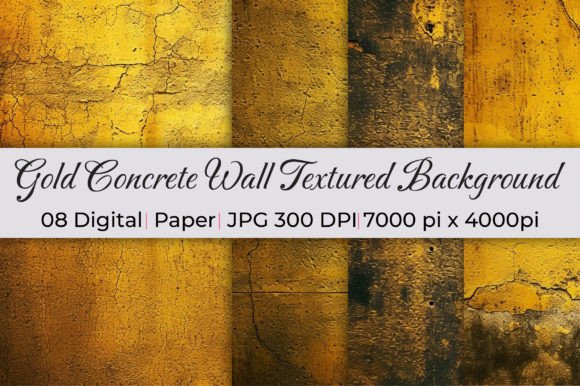
Gold Concrete Wall Textured Backgrounds: A Designer's Guide
Understanding the Allure of Gold Concrete Textures
There's a particular kind of visual tension that happens when you pair raw, industrial material with a finish that speaks of luxury. That's the core of Gold Concrete Wall Textured Backgrounds. It's not just a flat, metallic sheen; it's the honest, gritty character of concrete, captured in high-resolution detail, and then transformed with a rich, golden palette. You see the subtle pits, the faint form lines, the slight imperfections that give concrete its soul, all rendered in warm, inviting golds and bronzes.
This collection offers eight distinct interpretations of this concept. Some backgrounds lean into a more polished, almost brushed-metal look, where the concrete grain is finer and the gold has a brilliant, reflective quality. Others embrace a more weathered, industrial aesthetic, with deeper textures and a more matte, antiqued gold finish that feels like it has a story to tell. The personality is inherently modern yet timeless, blending the strength of architecture with the prestige of precious metal. It's a design asset that feels both grounded and aspirational, making it incredibly versatile.
Where These Backgrounds Truly Shine
The practical applications for these textured backgrounds are vast, precisely because they solve a common design challenge: adding instant depth and sophistication without overwhelming the main content. In web design, a hero section using one of these gold concrete textures can establish a brand's tone immediately—confident, established, and high-end. It works beautifully as a backdrop for bold sans-serif typography in logo design or for product photography in e-commerce, where the texture adds context and luxury without competing with the item for sale.
For social media graphics, these backgrounds are a game-changer. A consistent use of a specific texture from the collection can become a recognizable part of a brand's visual identity on Instagram or LinkedIn. Imagine quote cards, announcement graphics, or podcast cover art all set against that same sophisticated, textured gold. It creates cohesion and elevates the perceived quality of the content. In editorial design and publishing, they can serve as chapter openers or section dividers in digital magazines or PDF lookbooks, providing a rich visual pause. Packaging design for premium products—from cosmetics to gourmet goods—can leverage these textures on labels or boxes to convey value and craftsmanship before the product is even opened.
From Digital to Print and Beyond
Don't limit these assets to the screen. The 300 dpi, high-resolution JPGs are perfectly suited for print projects. Think business cards, letterheads, or presentation folders where a subtle texture in the background adds a tactile, professional feel. For entrepreneurs and small business owners, using a consistent texture across a website, social media, and printed materials builds a cohesive brand identity that feels intentional and polished. Crafters and hobbyists can also find great use for these in digital scrapbooking, invitation design, or creating unique art prints.
Practical Guidance for Implementation
Choosing the right background from the eight options is your first step. Consider the mood of your project. Is it sleek and contemporary? A background with a smoother texture and brighter gold might be best. Is it for a brand with heritage or artisanal qualities? A more distressed, matte gold concrete could be the perfect fit. Always test the background with your actual content—your logo, your text, your product images. Place them on top and assess the contrast and readability. The goal is for the texture to support, not sabotage, your message.
This is where font pairing becomes critical. The strong personality of a gold concrete wall background demands typography that can hold its own. A clean, modern sans-serif font often works exceptionally well, providing clear legibility against the detailed texture. For a more dramatic contrast, a elegant serif font can bridge the gap between the industrial background and formal content. Avoid overly ornate script fonts or handwritten fonts for body text, as they can get lost in the texture; however, a bold script used sparingly for a headline can create a stunning juxtaposition.
Think about visual hierarchy. Use the texture as your foundational layer. Place key text elements in areas of the background that are slightly less detailed or use a semi-transparent color overlay to ensure maximum readability. This approach maintains the texture's impact while guaranteeing your content is king. The included styles—each of the eight JPGs—give you options to match different sections of a project or to create variations for different campaigns while keeping a consistent textural theme.
Finally, consider the practicalities. These are premium font assets, meaning they are licensed for commercial use, which is essential for any professional project. Reviewing the specific license terms is always a good practice. By thoughtfully selecting your texture, pairing it with strong typography, and using it to create consistent visual cues, you transform these backgrounds from mere decoration into a powerful tool for building brand perception, enhancing audience engagement, and achieving a level of professionalism that truly sets your work apart.